What are Molas?
Molas are the reverse applique textile panels that form the front and back of traditional blouses worn by women of the Guna culture. Guna woman, with great skills and insightful design, sew the textile panels using techniques they have practiced for well over a hundred years.

Mola blouse
What is a Guna Mola?
The mola is a traditional textile art form created by the Guna (also spelled Kuna) people of Panama and Colombia. A central aspect of Guna women’s clothing and cultural expression, the mola is a colorful, hand-sewn panel that forms part of a woman’s blouse. Beyond its function as clothing, the mola is a powerful symbol of Guna identity, creativity, and resistance to cultural assimilation.
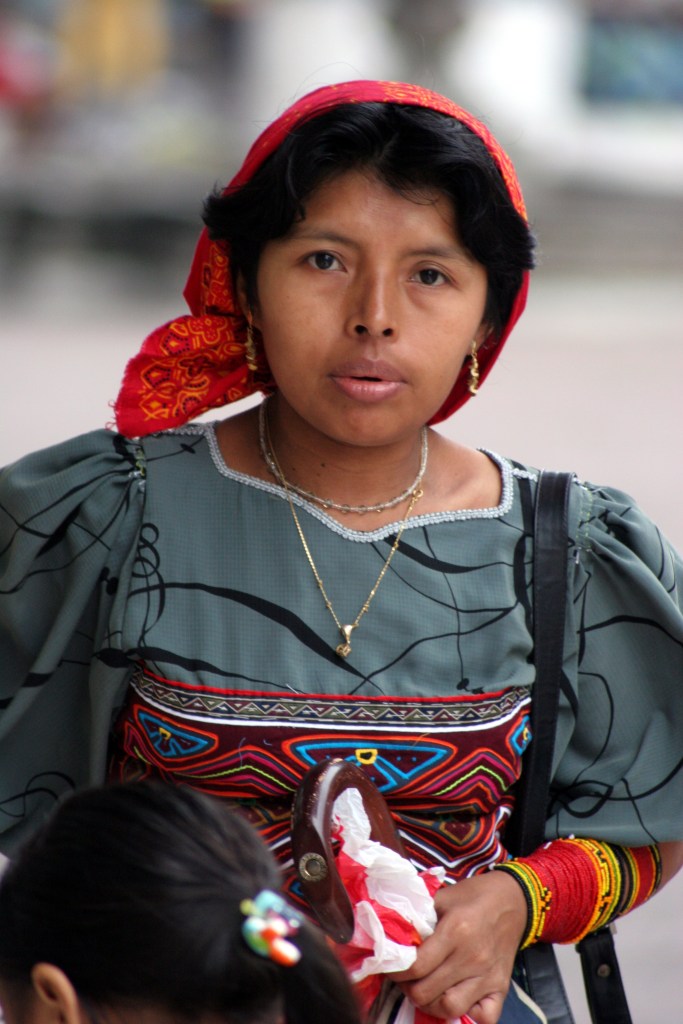
These photographs of Kuna women wearing their mola attire, a source of cultural pride, were taken in Kuna Yala and Panama City, c. 2005. Photographs courtesy of Wikimedia Commons. 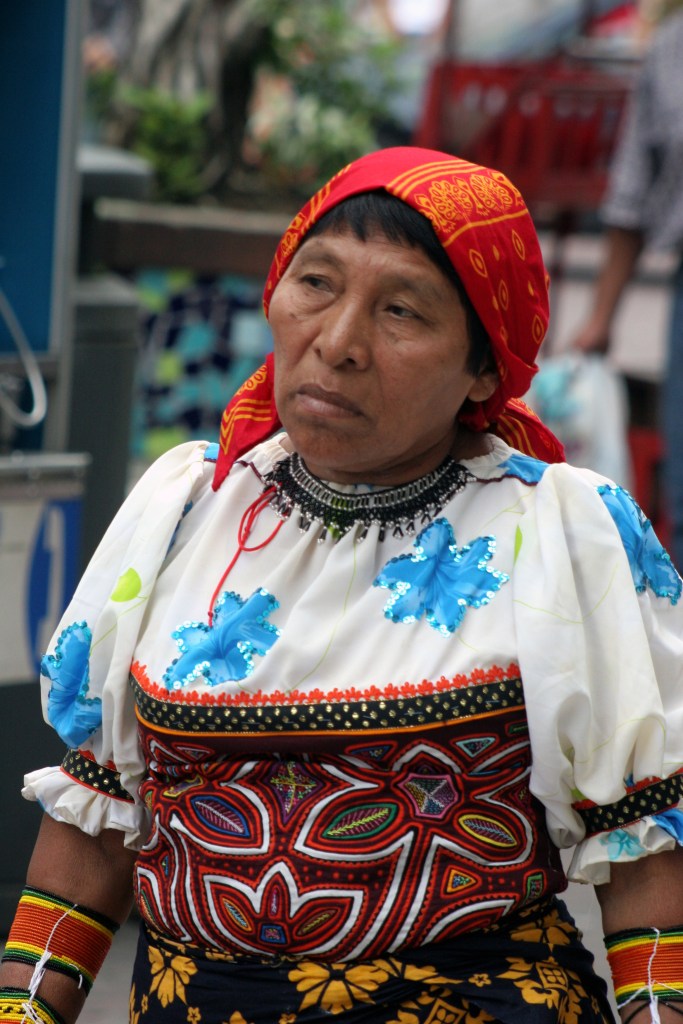
Kuna women wearing their mola attire, a source of cultural pride, were taken in Kuna Yala and Panama City, c. 2005. Photographs courtesy of Wikimedia Commons. 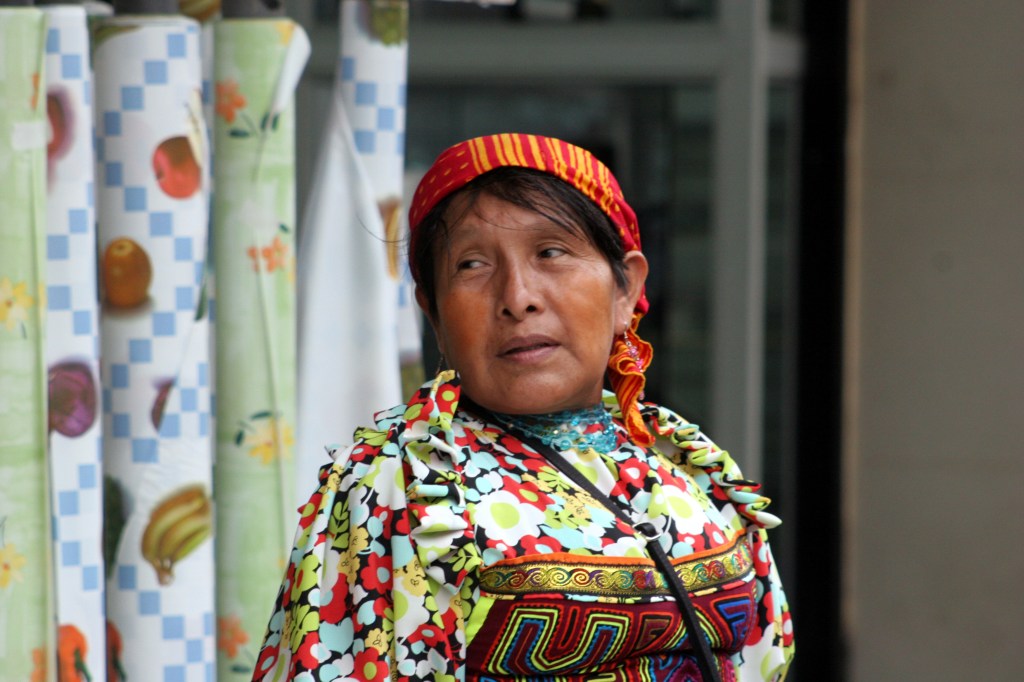
Kuna women wearing their mola attire, a source of cultural pride, were taken in Kuna Yala and Panama City, c. 2005. Photographs courtesy of Wikimedia Commons. 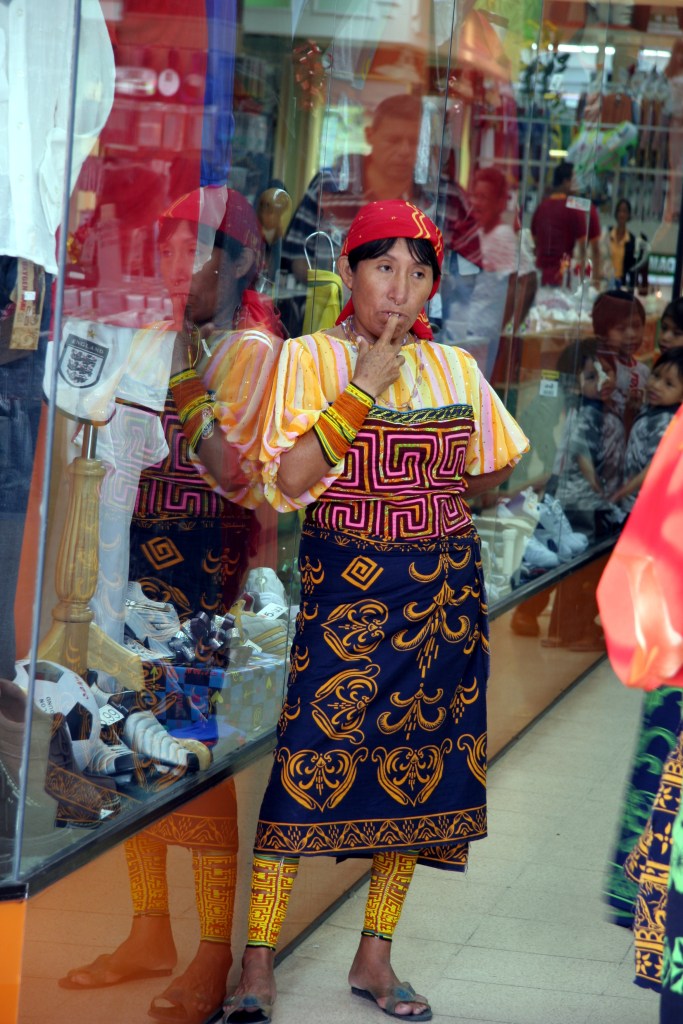
Kuna women wearing their mola attire, a source of cultural pride, were taken in Kuna Yala and Panama City, c. 2005. Photographs courtesy of Wikimedia Commons. 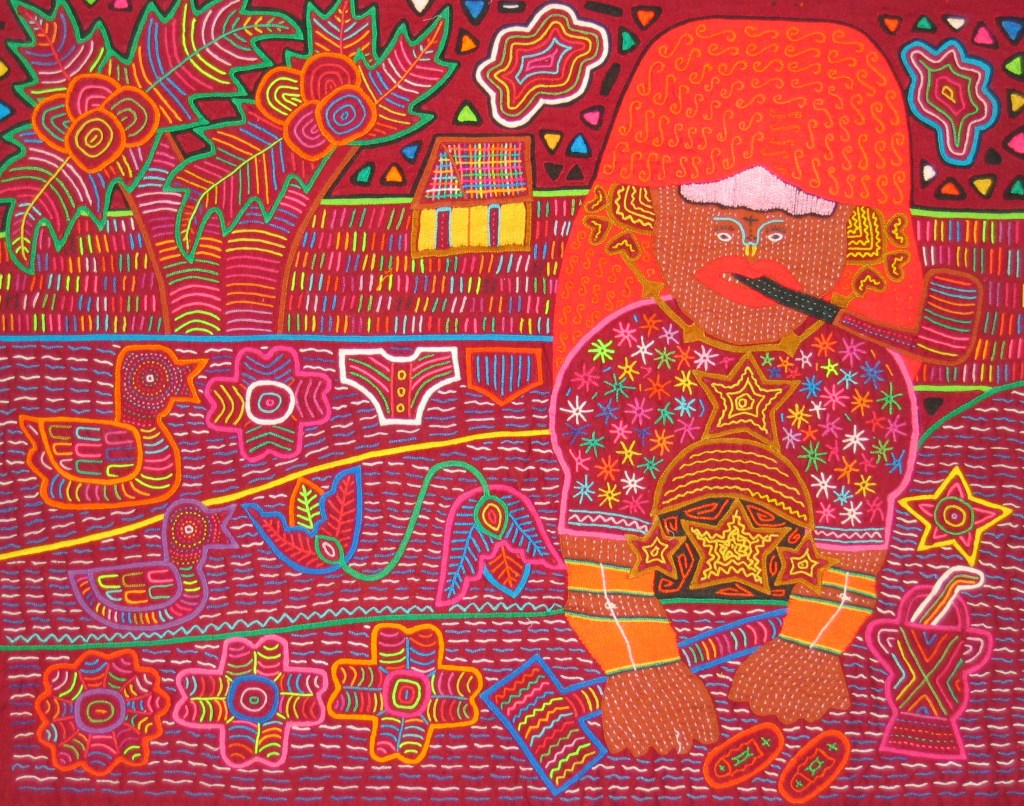
Kuna women are depicted in their mola attire surrounded by tropical foliage, birds, clouds, clothing and a cooking pot with a ladle, c. 2005. It is not uncommon for Kuna women to smoke pipes. These molas are elaborately topstitched and embroidered. Copyrighted photographs by and courtesy of Sue Murray “Molagirl” Gomez. 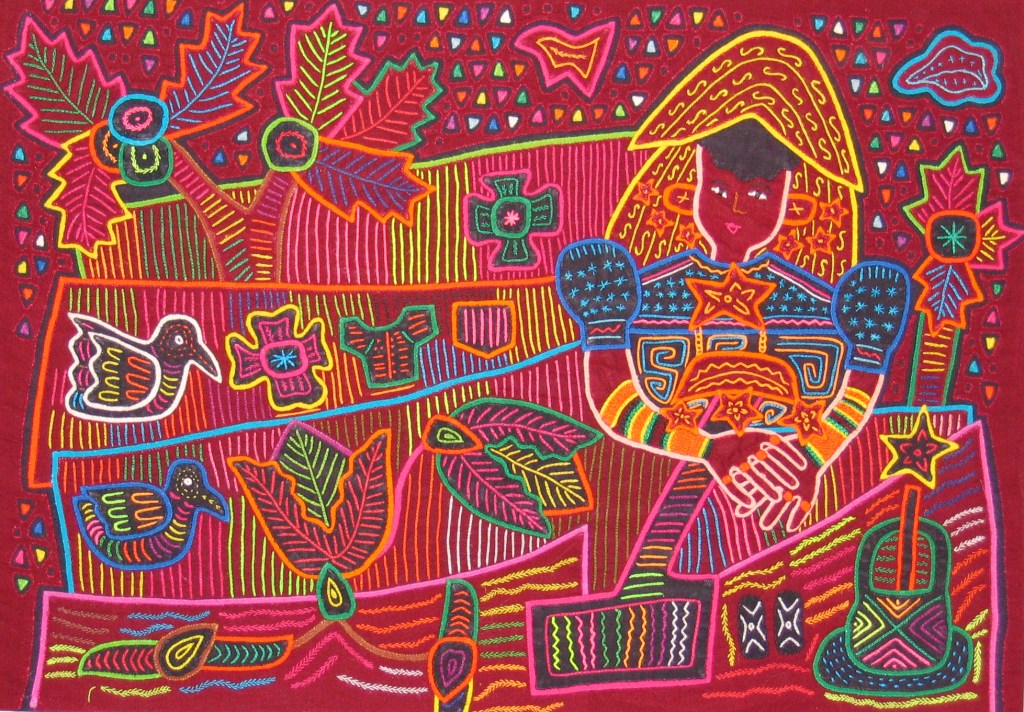
Kuna women are depicted in their mola attire surrounded by tropical foliage, birds, clouds, clothing and a cooking pot with a ladle, c. 2005. It is not uncommon for Kuna women to smoke pipes. These molas are elaborately topstitched and embroidered. Copyrighted photographs by and courtesy of Sue Murray “Molagirl” Gomez. 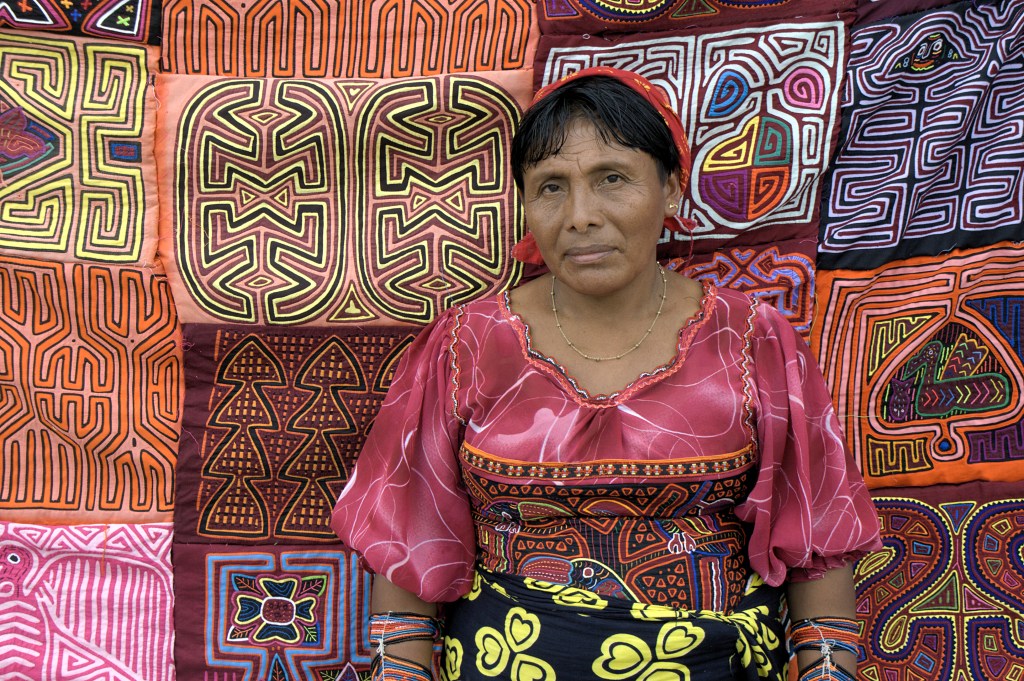
Kuna woman standing in front of a display of molas for sale, c. 2005. Photograph by Markus Leupold-Löwenthal, courtesy of Wikimedia Commons. 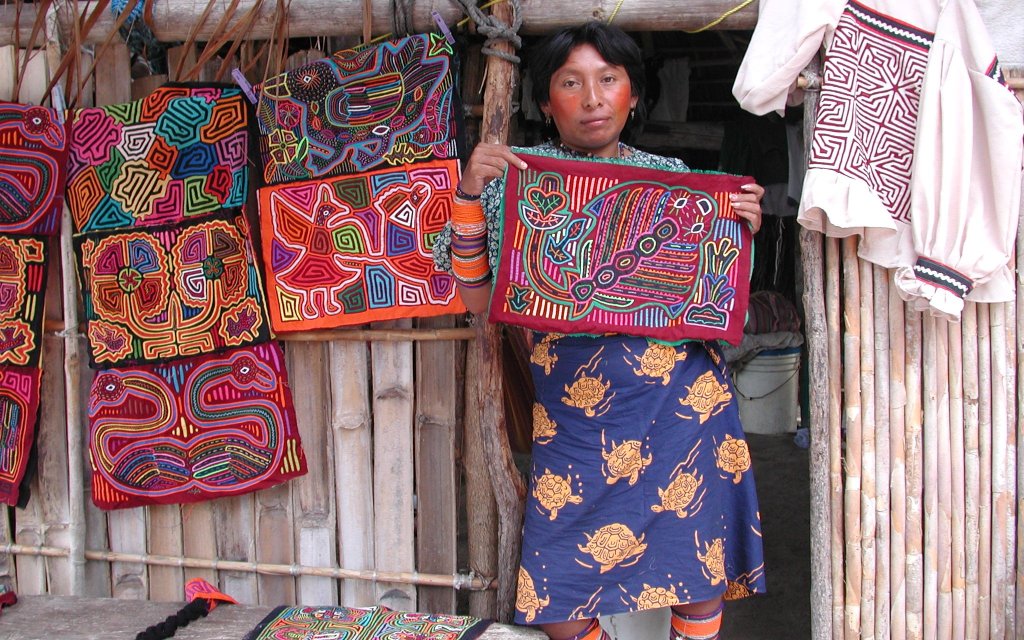
Kuna woman holding and displaying her molas for sale outside her home in Kuna Yala, c. 2005. Photograph by S/V Moonrise, courtesy of Wikimedia Commons 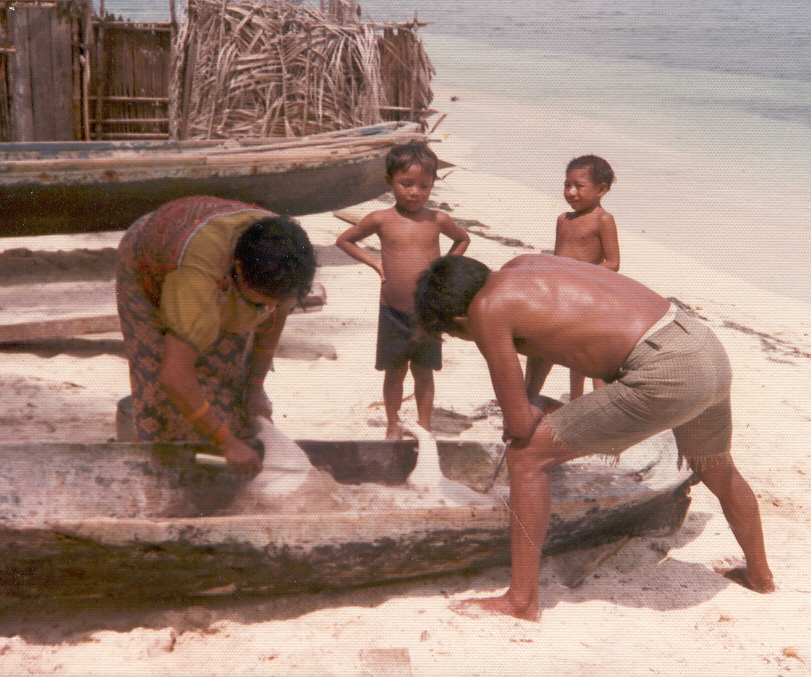
A Kuna man and woman clean the day’s catch in the bottom of a canoe while children look on, c. 1975. Photograph by Edith Read Barkowitz. 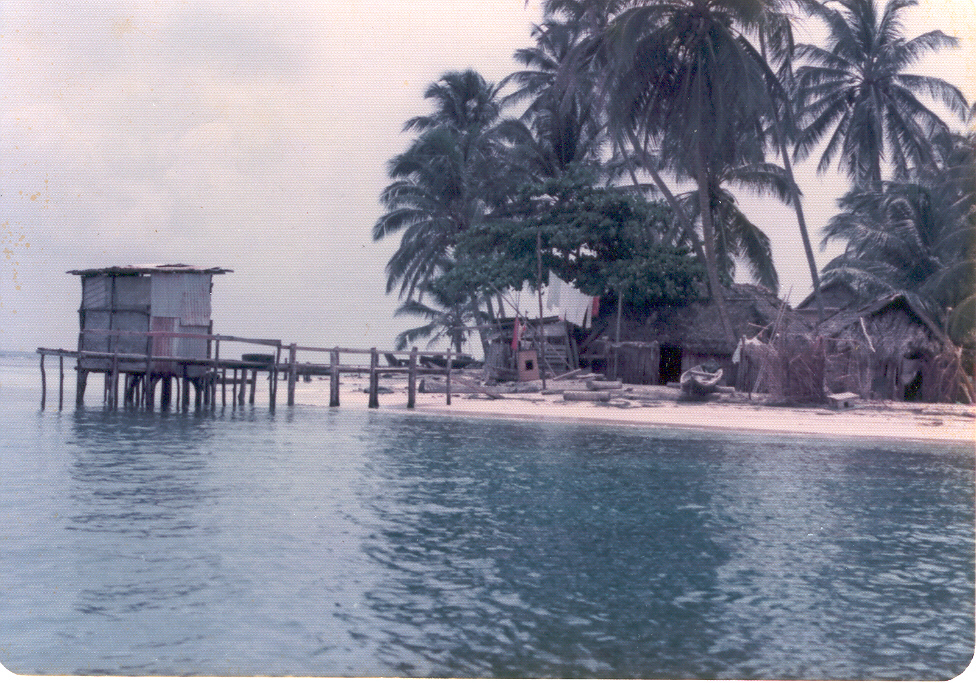
Approaching an island, Kuna Yala, c. 1975. Photograph by Edith Read Barkowitz. 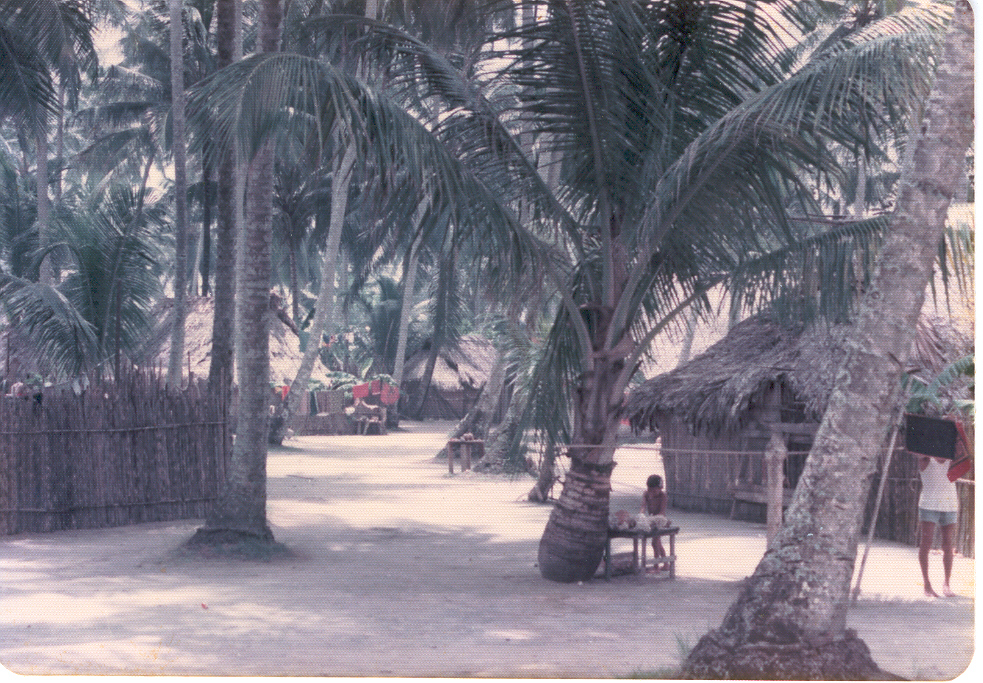
A pathway winds through the island with houses and palms on either side and molas on display, Kuna Yala, c. 1975. Photograph by Edith Read Barkowitz. 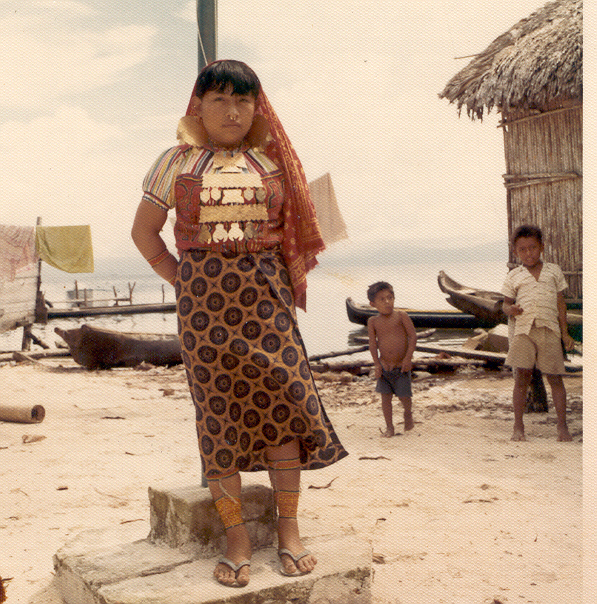
A Kuna woman wearing mola attire with children, boats and a house in the background, Kuna Yala, c. 1965. Barkowitz collection. 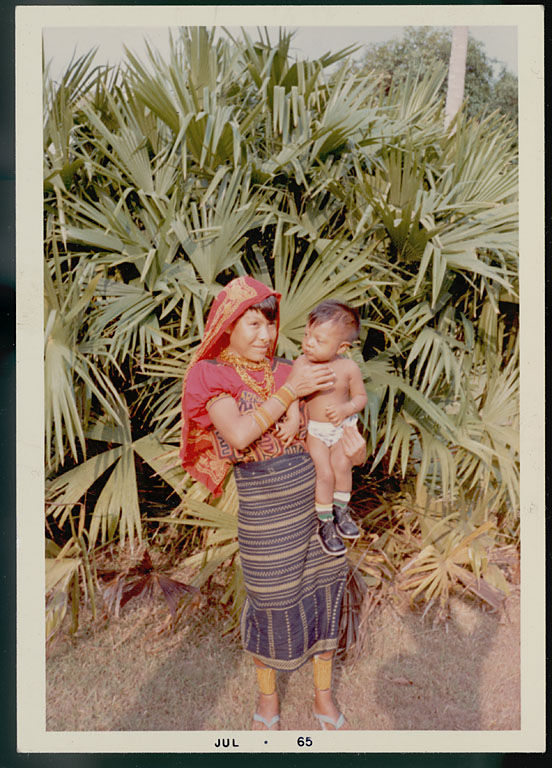
A Kuna woman holds a baby on Kuna Yala, 1965. Barkowitz collection. 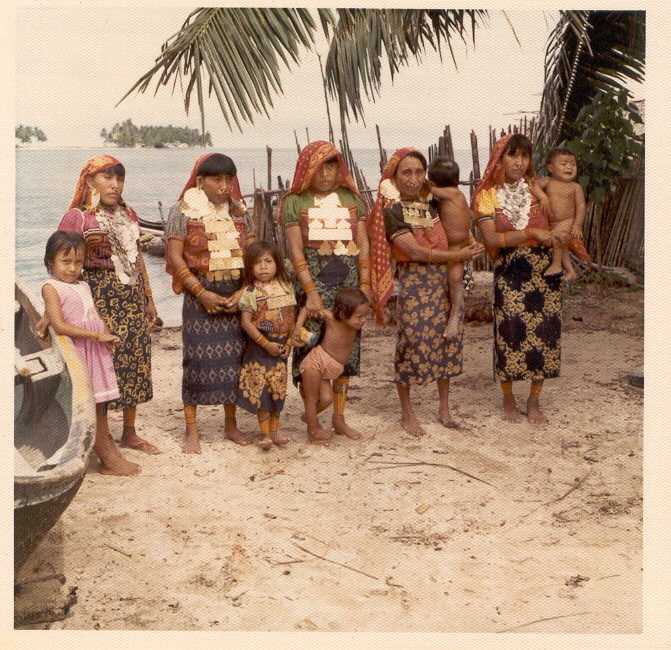
Kuna women wearing their mola attire gather with their children on an island in Kuna Yala with a dugout to their left and clear water and skies behind, c. 1965. Barkowitz collection. 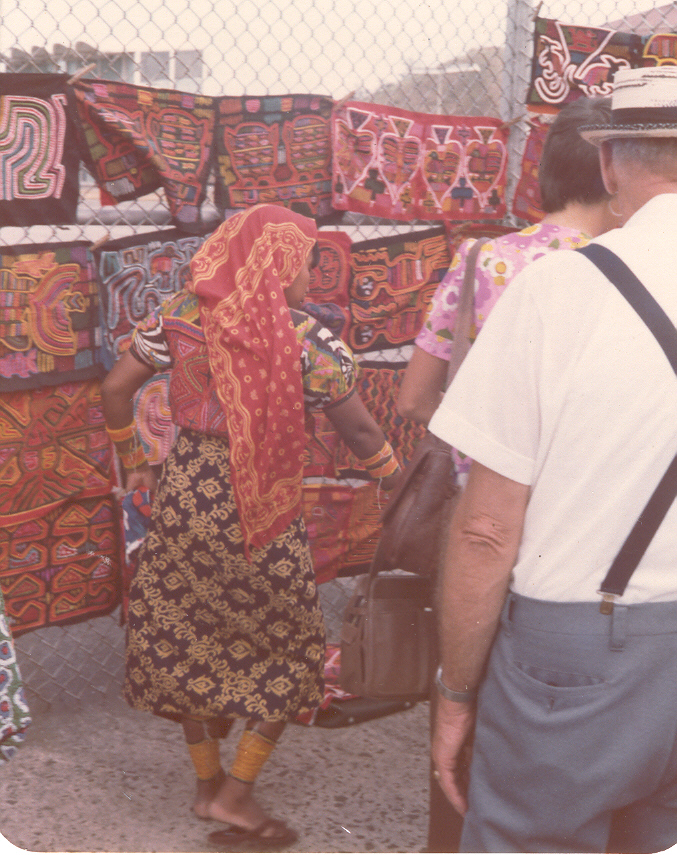
Molas were displayed and sold to visitors at the Panama Canal’s Miraflores Locks Visitor Center by the Kuna women, c. 1980. Photograph by Edith Read Barkowitz. 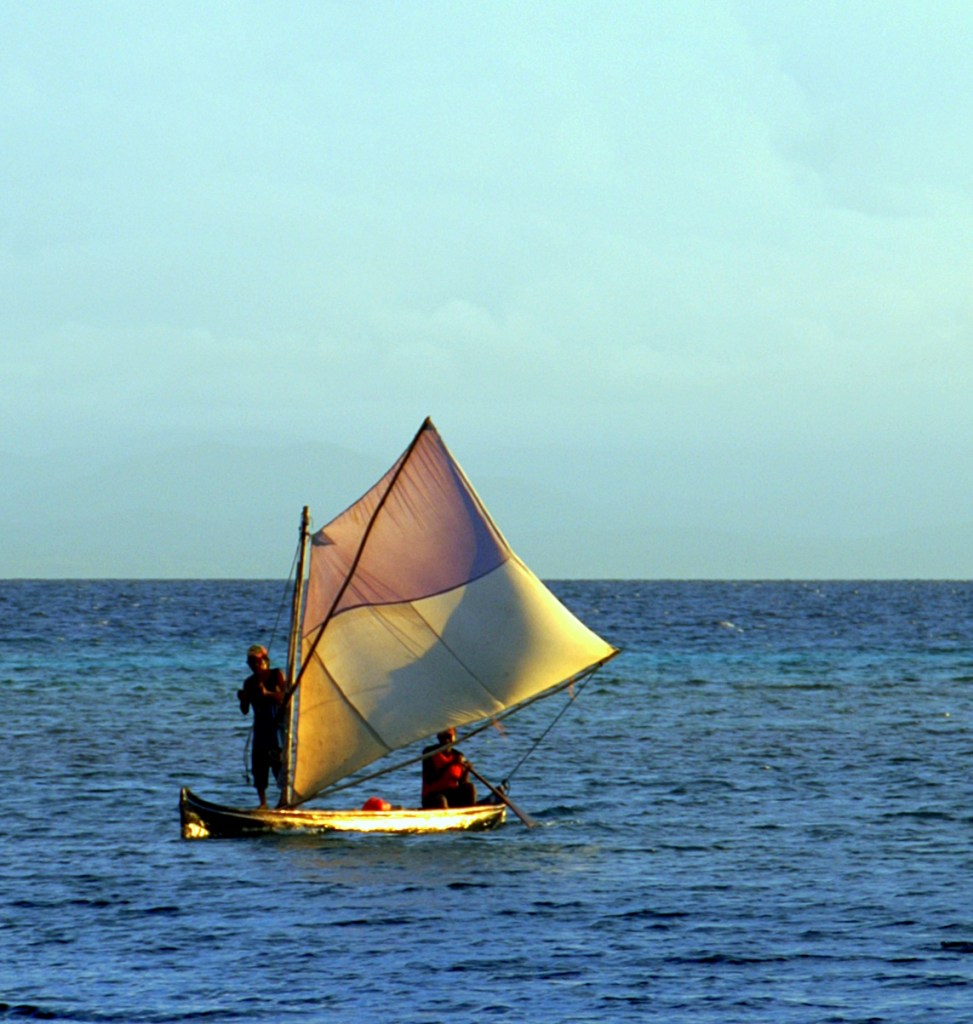
Kuna men sailing a small hand built dugout canoe on the waters of Kuna Yala, c. 2005. Photograph courtesy of Wikipedia Commons. 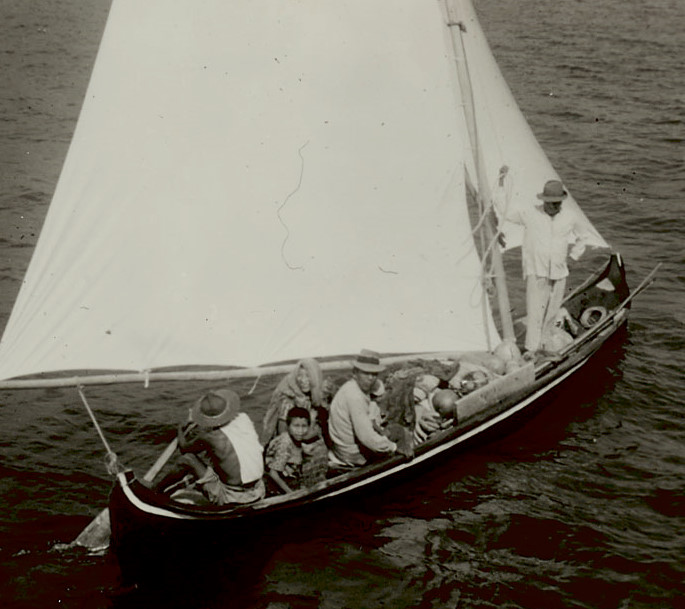
“Cunas in Dugout Canoe with Sails on Water April, 1939”, 7” x 5” photo print, image created by Waldo LaSalle, Schmitt, courtesy of National Anthropological Archives of the Smithsonian Institution, DOE So Amer: Panama: Cuna: NM 152360 04281900. 
Photograph of the Kuna’s islands from the shore of Kuna Yala, Panama, c. 2005. Photograph courtesy of Wikipedia Commons. 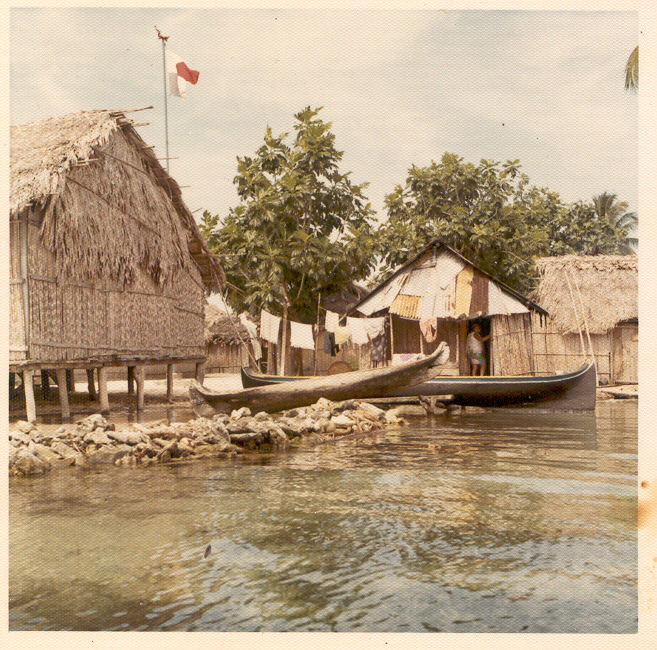
Photographs of inhabited San Blas Islands, Kuna Yala, c. 1970. Photographs by Edith Read Barkowitz. 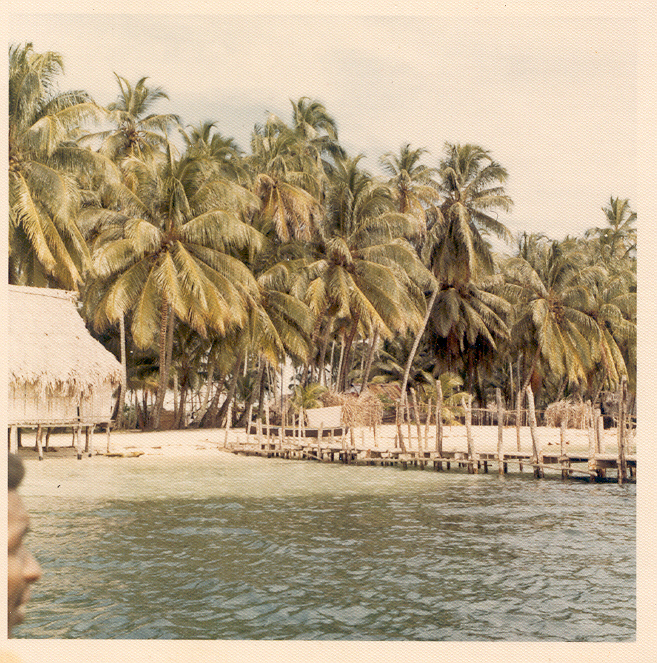
Photographs of inhabited San Blas Islands, Kuna Yala, c. 1970. Photographs by Edith Read Barkowitz. 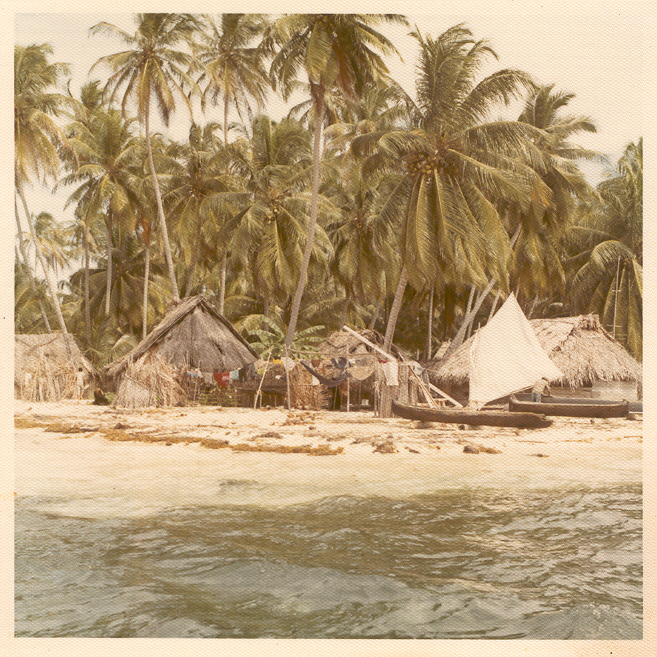
Photographs of inhabited San Blas Islands, Kuna Yala, c. 1970. Photographs by Edith Read Barkowitz. 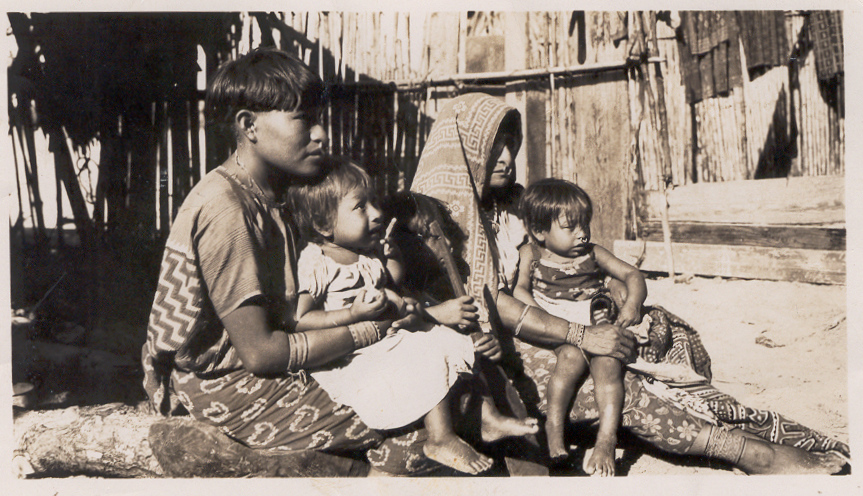
Two Kuna women sit with children on their laps in front of an island home, Kuna Yala, c. 1950. Barkowitz collection. 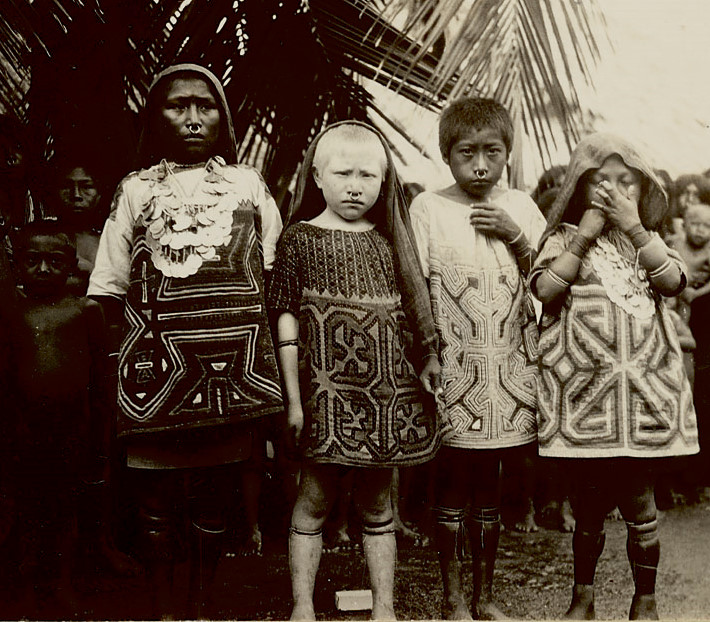
“Four Cuna Girls, One Albino, Wearing Nose rings, and in Costume; Group of Children Behind Them, 1923”, 3” x 3” photoprint, image created by Charles Charlton, courtesy of National Anthological Archives of the Smithsonian Institution, DOE So Amer: Panama: Cuna: NM 84900 04277700.4 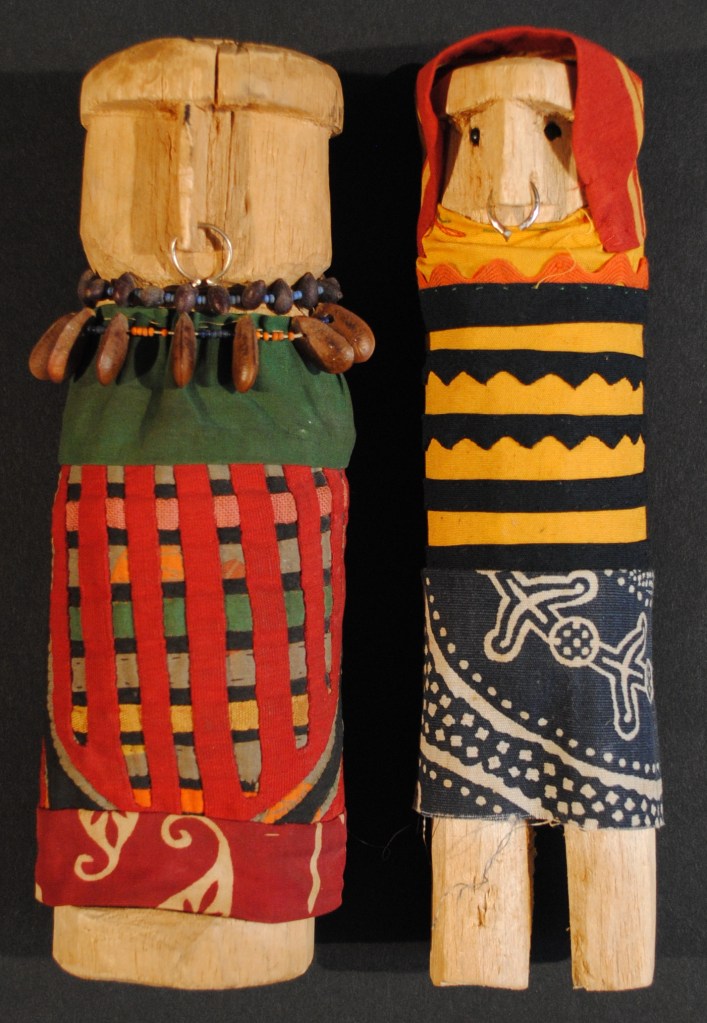
“Daughter of the Medicine Man” by Texana, 1969. Barkowitz collection. 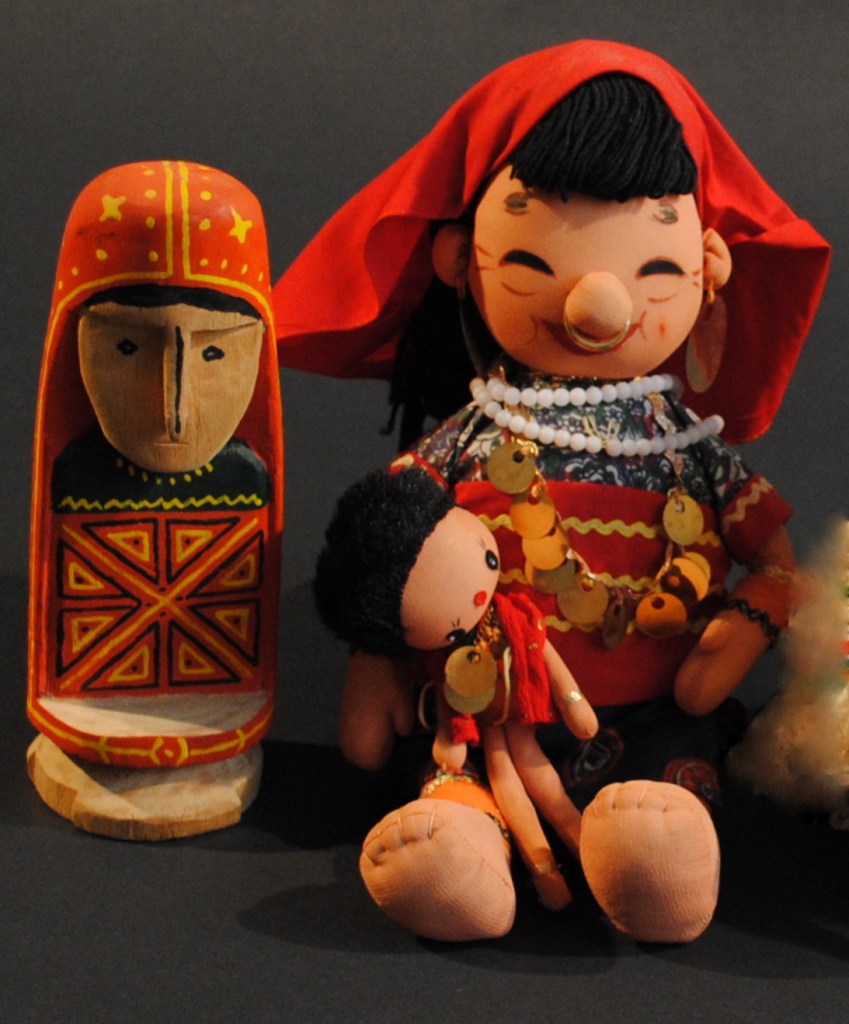
“The Medicine Man” by Texana, 1969. Barkowitz collection. 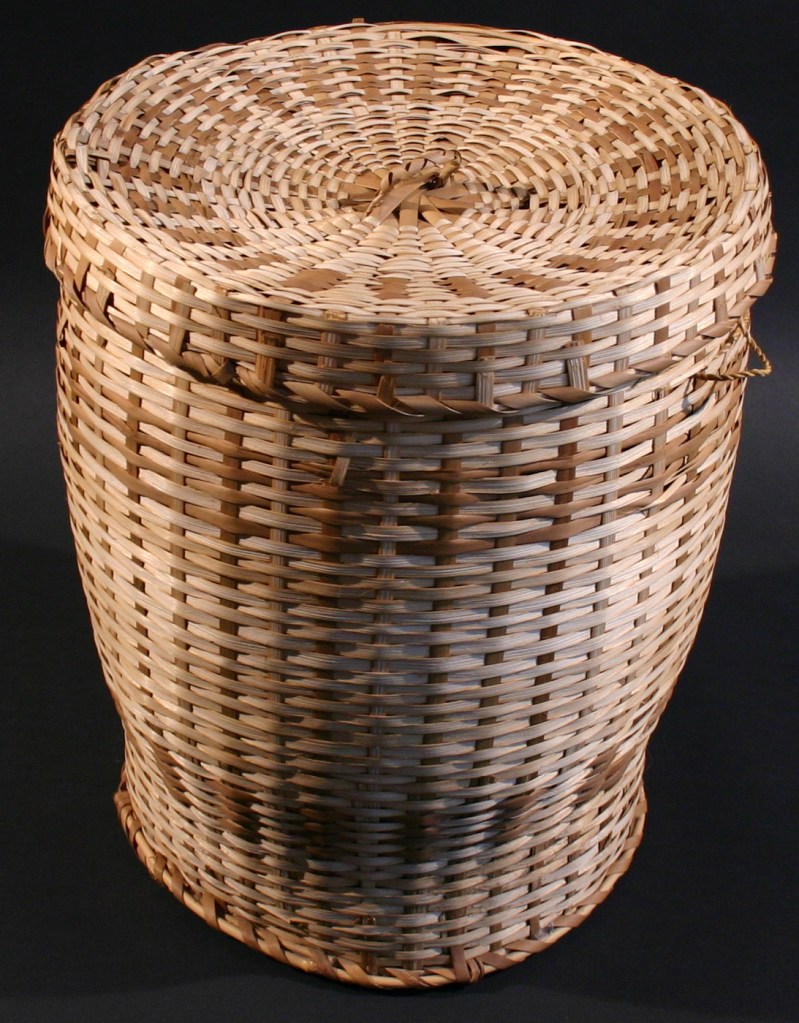
Basket with lid, dried palm fronds, fibers and straw basket, 17” height with lid, 14” diameter, Kuna Yala, Panama, c. 1970. Baskets with lids are used to store clothing in Kuna homes and for collecting and harvesting crops and are traditionally woven by Kuna men. Barkowitz collection. 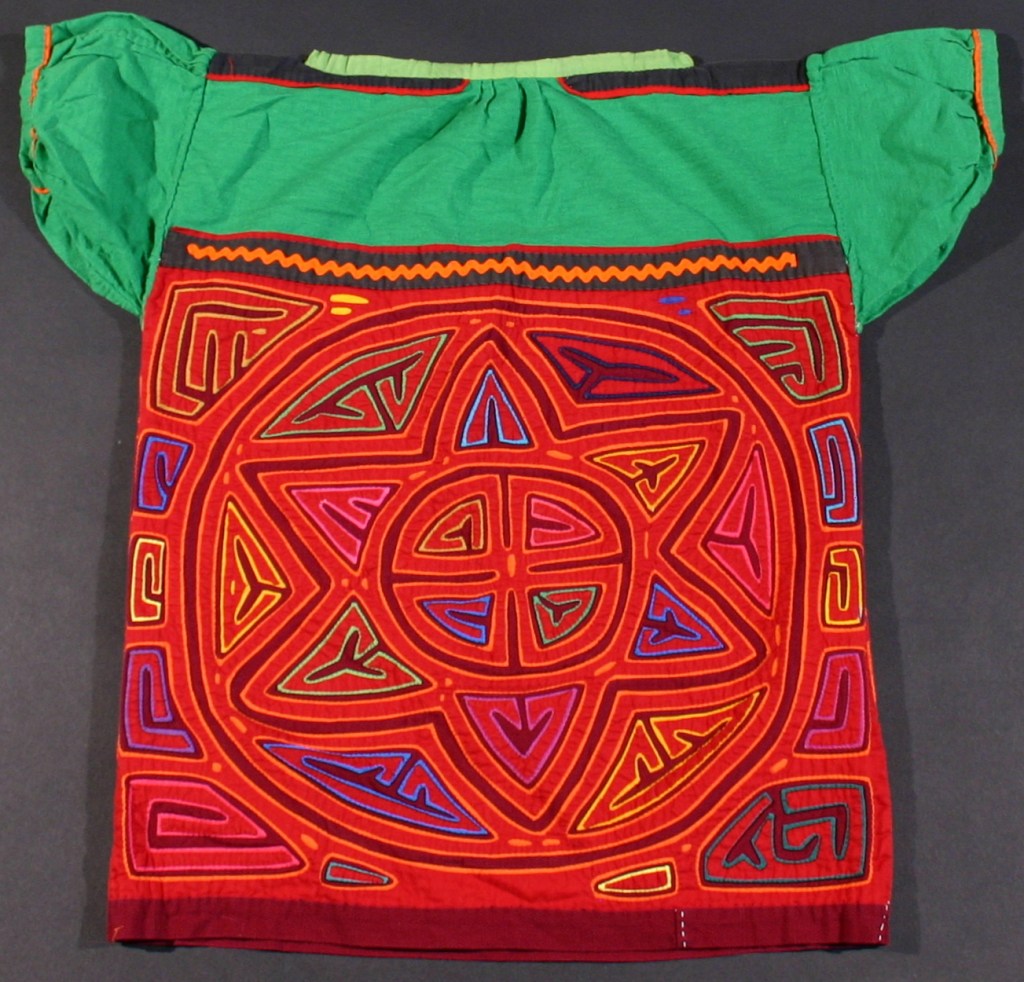
A six pointed star (Star of David) mola blouse with red background, the Star of David was a popular design motif in the 1970s, 18” width x 15 ½” height (each mola panel included in the blouse), 18” width x 23” height from top to bottom of blouse. Barkowitz collection. 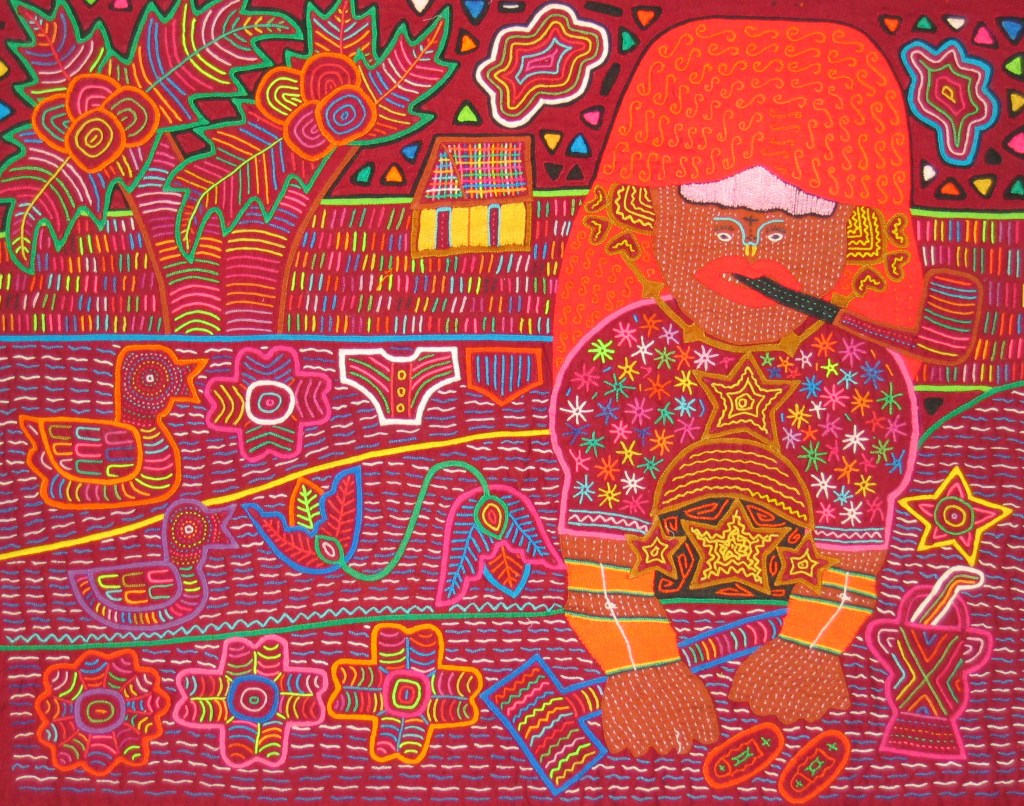
Kuna women are depicted in their mola attire surrounded by tropical foliage, birds, clouds, clothing and a cooking pot with a ladle, c. 2005. It is not uncommon for Kuna women to smoke pipes. These molas are elaborately topstitched and embroidered. Copyrighted photographs by and courtesy of Sue Murray “Molagirl” Gomez. 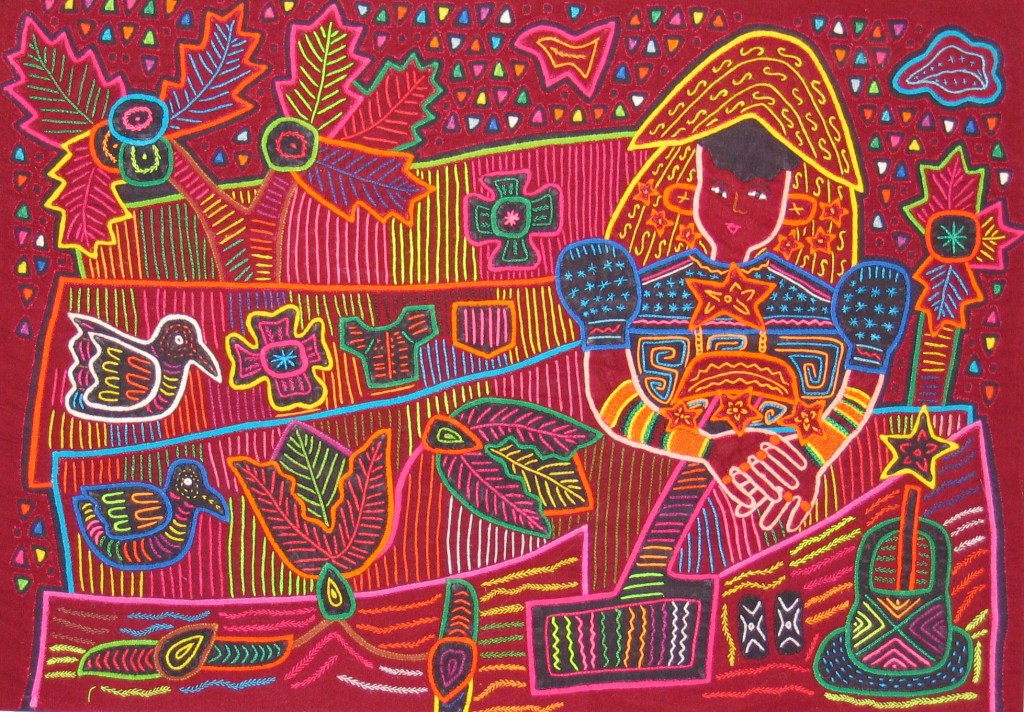
Kuna women are depicted in their mola attire surrounded by tropical foliage, birds, clouds, clothing and a cooking pot with a ladle, c. 2005. It is not uncommon for Kuna women to smoke pipes. These molas are elaborately topstitched and embroidered. Copyrighted photographs by and courtesy of Sue Murray “Molagirl” Gomez.
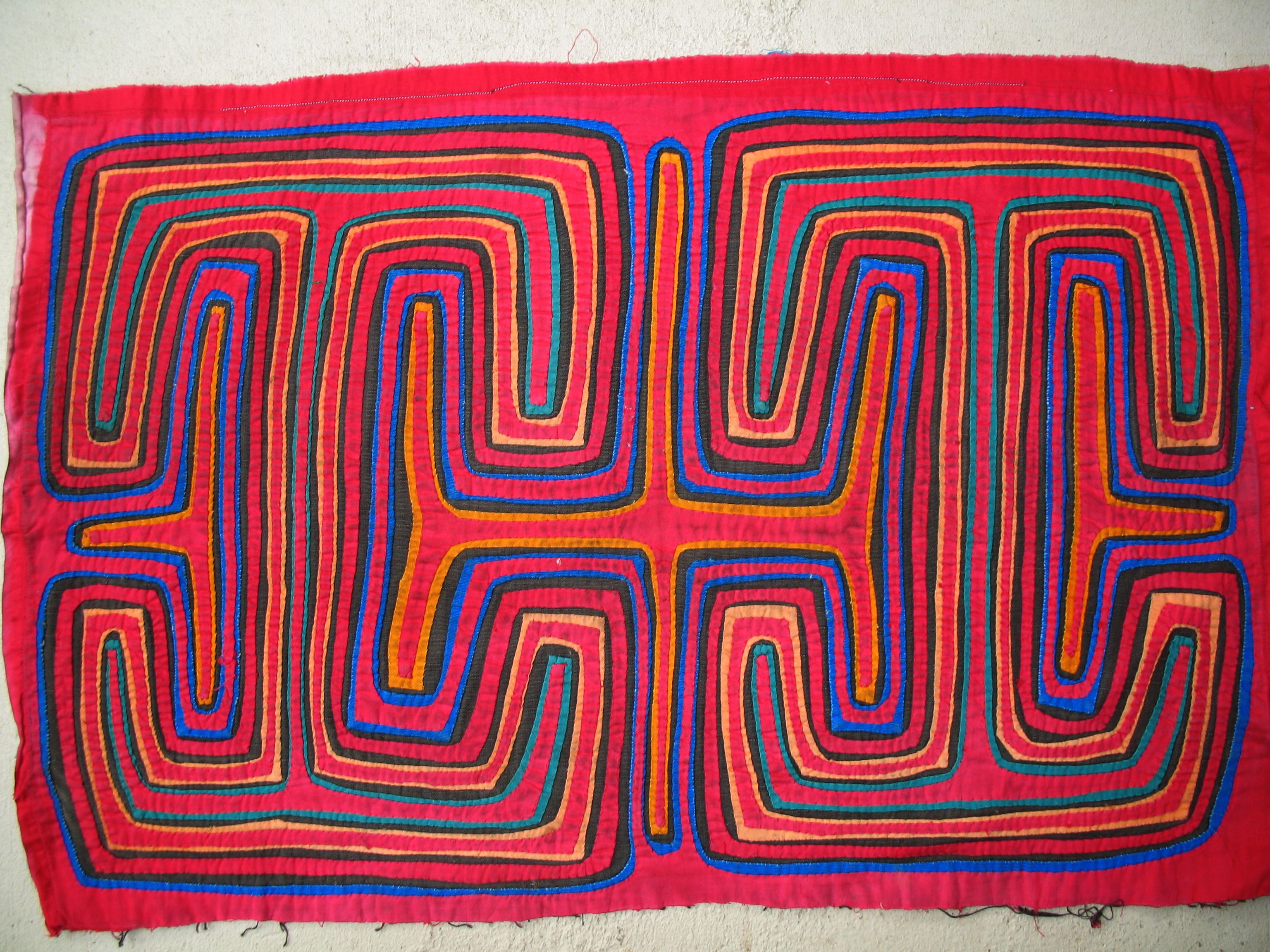
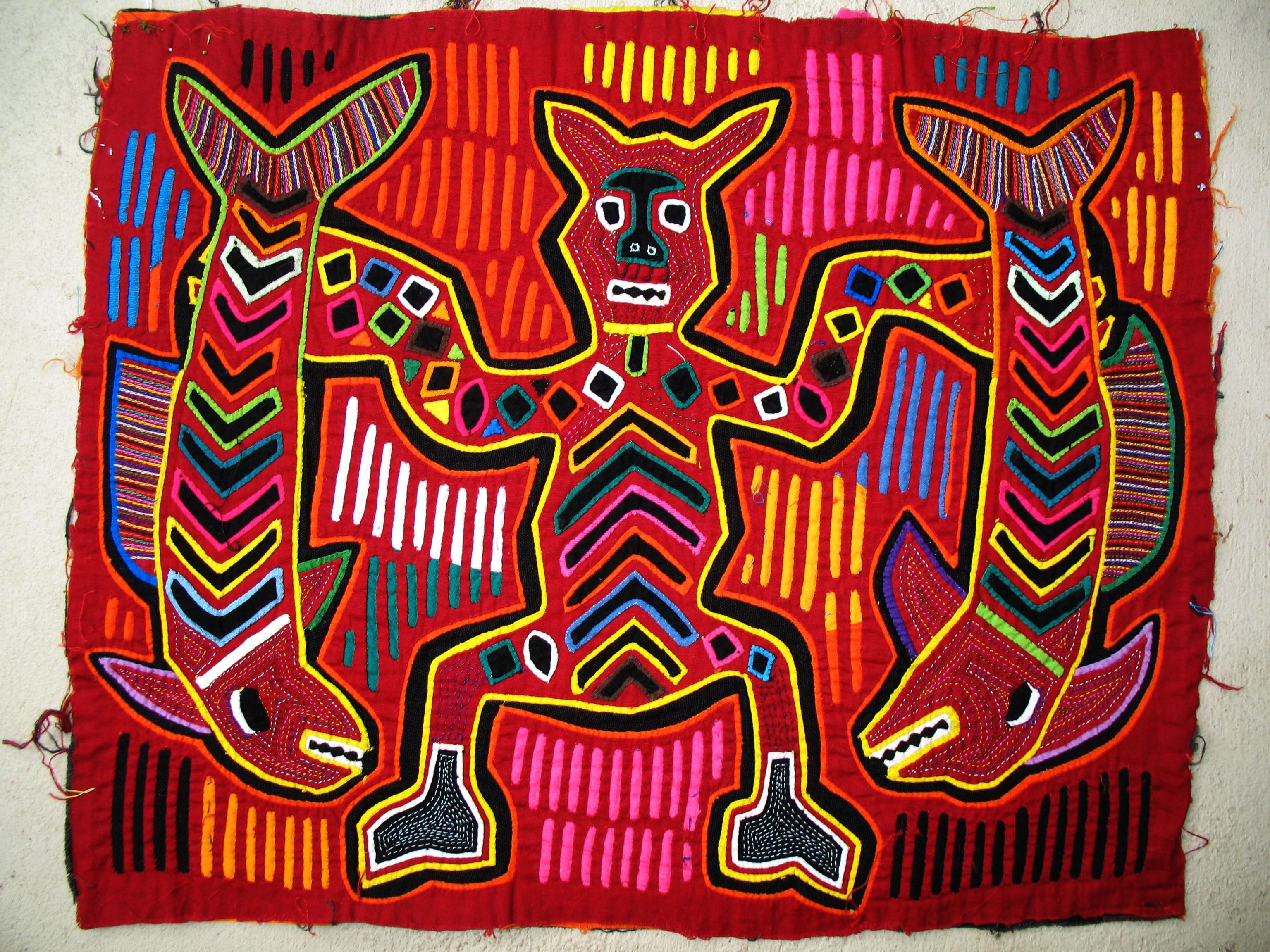
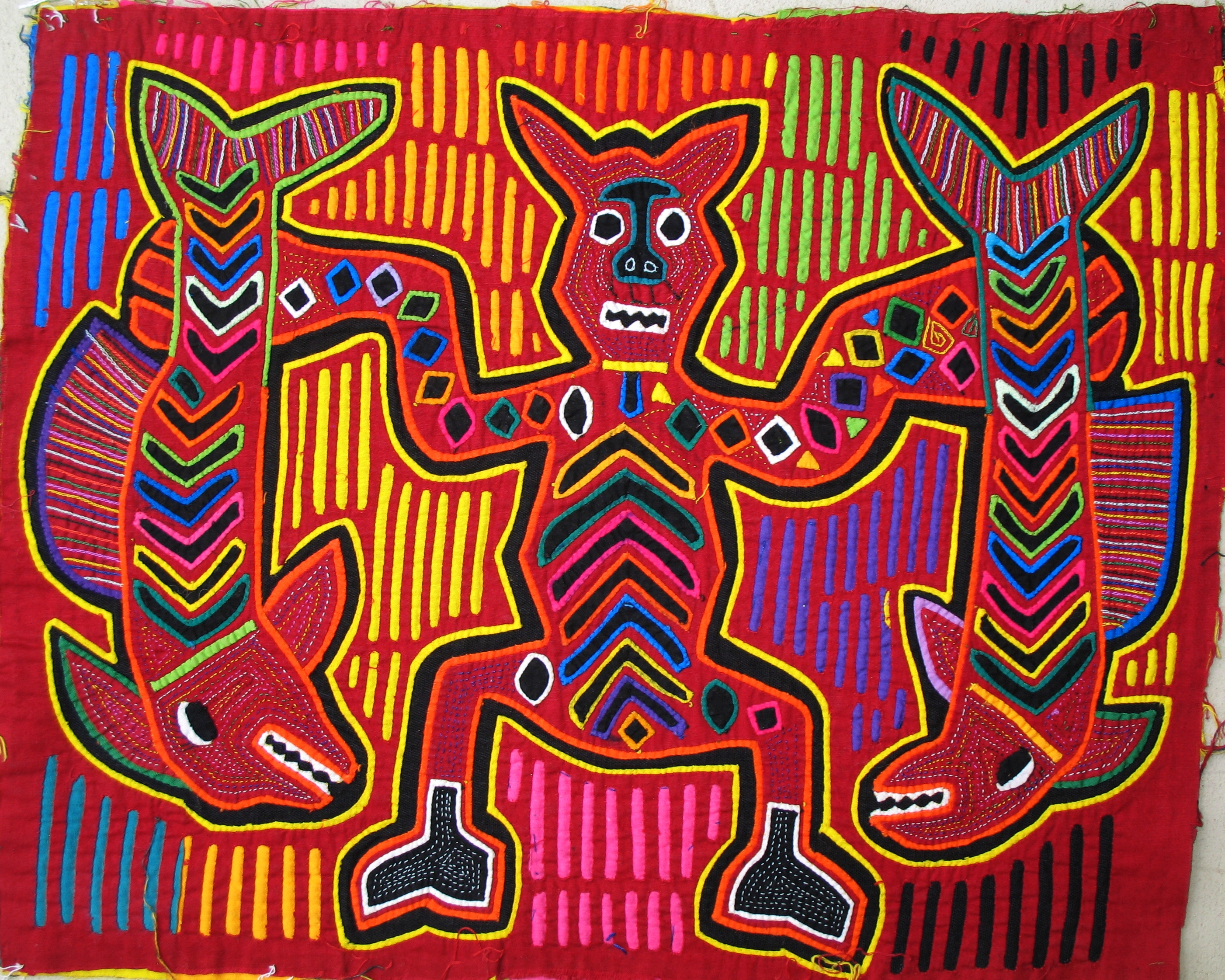
The word mola means “clothing” or “blouse” in the Guna language, but in common usage it refers specifically to the two rectangular textile panels worn on the front and back of a woman’s blouse. These panels are made using a technique called reverse appliqué, in which several layers of cloth (usually cotton) are sewn together and then selectively cut away to reveal different colors and patterns underneath. The edges of the cut fabric are meticulously turned under and stitched down by hand, resulting in intricate and highly detailed designs. Additional decorative stitching or embroidery may enhance the design further.

Two Mola Blouses from the 1970’s. Note each blouse has two molas, a front and a back, so molas are designed and sewn in matching pairs that share a common theme and design.
Molas are traditionally made by Guna women, who begin learning the craft from an early age. The complexity of a mola’s design can indicate the skill of the maker and her dedication to cultural practices. Molas can take weeks or even months to complete, depending on their size and intricacy. Originally, the Guna decorated their bodies with geometric patterns using natural dyes, but when cloth became available through trade in the 19th century, they transferred these designs to fabric.
Themes in molas vary widely and often reflect a combination of traditional cosmology, modern influences, and personal expression. Geometric patterns remain popular, but many molas also depict animals, plants, mythological creatures, scenes from daily life, and even political or popular culture references. This blending of old and new makes molas not only cultural artifacts but also living, evolving works of art.


Molas also carry deep symbolic and cultural significance. For the Guna, they are a visual language of identity and resistance. During Panama’s efforts to assimilate indigenous populations in the early 20th century, Guna women’s refusal to abandon traditional dress—including the wearing of molas—was a cornerstone of the Guna Revolution of 1925, which led to the establishment of the autonomous Guna Yala territory. Today, molas are a source of pride and a tangible link to Guna traditions, especially in the face of globalization and cultural homogenization.

In recent decades, molas have gained recognition as fine folk art and are sold around the world. While this provides income for many Guna families, it also raises concerns about commodification and the loss of traditional meanings. Nonetheless, the mola remains a vibrant symbol of cultural resilience, artistic mastery, and indigenous identity.
In summary, a mola is far more than a decorative textile. It is a unique expression of Guna worldview, artistry, and resistance—stitched into every thread by the hands of Guna women, passed from generation to generation, and worn with pride.
The mola summary created with the assistance of ChatGPT

 Guna Molas